Published in The Sick Times on 8th August 2025. The original article can be read here
Posthumous album of singer Kara Jane released on Severe ME Awareness Day

This month, on August 8, the posthumous album of a young singer was released to mark Severe ME Awareness Day.
Kara Jane, from Derbyshire in the U.K., had myalgic encephalomyelitis (ME) for most of her life and died in January 2023 at just 32 years old. Despite a life of immense pain and restriction, Kara Jane left a legacy of beautiful music that has moved and inspired many thousands of people around the world while raising money for research. I was fortunate to call her a close friend.
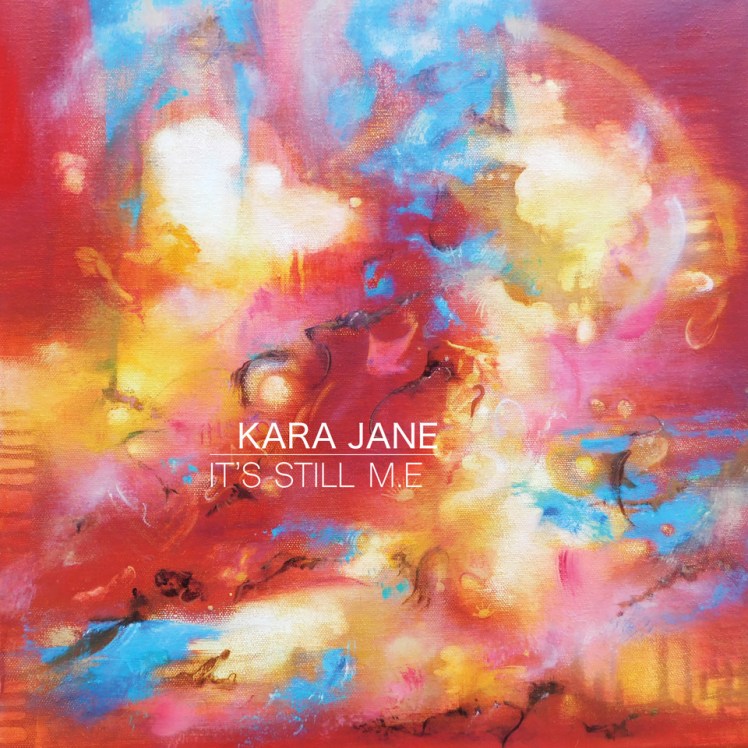
Kara came to the attention of the ME community and the wider world in August 2020 with the release of her first album, “It’s Still M.E.” With vocals recorded entirely from her bed — which she only ever left for emergency hospital admissions — the album reached an incredible number eight on the U.K.’s Official Album Downloads Chart. For a few days, it even outsold such artists as Taylor Swift on Amazon and iTunes. All proceeds from the album went toward Kara’s research fund. It was her dream to establish a postmortem facility for those who die with or from ME, though sadly this didn’t happen during her lifetime.
Kara’s voice touched countless people around the world, as she conveyed both her pain and strength. Her unique talent lay in her ability to transmute suffering into songs of incredible beauty. Their universal themes of love, loss, and longing have resonated with many, regardless of circumstance. BBC Radio Cornwall described Kara’s music as “beautiful … powerful and haunting.”
Now, five years later, and two years on from her death, Kara’s family is releasing her second fundraising album, “In Limbo,” in memory of a beloved daughter and sister.

Severe illness but a spirit that shone brightly
Kara developed ME as a young child (though would not be diagnosed for many years) and by the age of 16 could no longer walk. Against considerable odds, she managed to attend university in a wheelchair, but after graduating, she experienced rapid deterioration. Her decline was accelerated by inappropriate medical treatment, including graded exercise therapy.
In her final years, Kara was entirely bedridden and dependent on twenty-four-hour nursing care. She was on oxygen, required a catheter, and had pain so severe that even fentanyl was unable to control it.
Her immune system was particularly badly affected by her ME, and after repeated attacks of sepsis, doctors told her that she was unlikely to survive for long. Like many others with ME, Kara experienced disbelief from some doctors and nurses, even when she was repeatedly admitted to the hospital with life-threatening infections. It was her fervent wish to change these damaging attitudes.
“I’ve had a doctor, who sadly I’ve seen more than once, openly admit that she doesn’t believe in ME — so God only knows what she thinks I’m there for when I cross the threshold into the hospital yet again,” she wrote in a blog post in 2019. “This is not ok. It’s not ok for someone to be able to decide whether they believe in my disease or not, and letting this influence their treatment decisions about my case.”

Pain and loss transformed into musical beauty
In 2018, to process her emotions as her health deteriorated, Kara began writing songs. I clearly remember when she first shared them with me: I was so moved that I cried as I listened.
A family friend visited her in the hospital and recorded demos in the hope that professional musicians would come forward and complete the album. I wrote an appeal on my blog in 2020, and when BBC News picked up the story, Kara was flooded with offers of help.
The U.K. was under strict COVID-19 stay-at-home orders at the time. Unable to perform, and out of work until restrictions eased, a remarkable group of musicians and producers — led by sound engineer Liam Hicks — helped create Kara’s album, devoting thousands of hours between themselves.
When “It’s Still M.E” entered the charts, U.K. media outlets covered its success. The album’s reach may have been universal, but for many of us the songs felt deeply personal.
“You’ve got hope, but I can’t cope. Let me go. Let me go.” Lyrics such as these, from “This Is Love,” took me back to my own bleakest days with severe ME. I saw my anger reflected in “Crushed”: “I want to take a mallet to the stained glass. I want to rip up every flower, every tree.” And I knew Kara’s despair in “Remember Us,” her plea to the medical profession: “You saw my face, you touched my skin. Couldn’t you feel the pain within?”
“The album means an incredible amount to me,” Kara said at the time. “It represents my journey so far: it’s about loss, anger and pain — but most of all it’s about love. It’s also my legacy to leave to the world long after I am gone.”
In Limbo: Suspended between life and death
Behind her achievements, however, Kara’s suffering was extreme. Her life had become a succession of emergency hospital admissions, and when she caught COVID-19 in late 2020, doctors told her that she wouldn’t last the night. Against all expectations, she clung to life. But her survival left her with painfully conflicted emotions.
“I don’t know how to feel,” she told me in a message. “I don’t want to die but I can’t keep living like this either. I could just cry but for some reason I can’t. I’m trapped inside somewhere and I can’t get out.”
Kara’s father, David, who had never left her bedside, encouraged her to continue writing songs. And so her second album, “In Limbo,” was born. As her health declined and it became clear that the end was drawing close, Kara painstakingly recorded her vocals — once again from her bed — knowing that she was unlikely ever to hear the completed album.
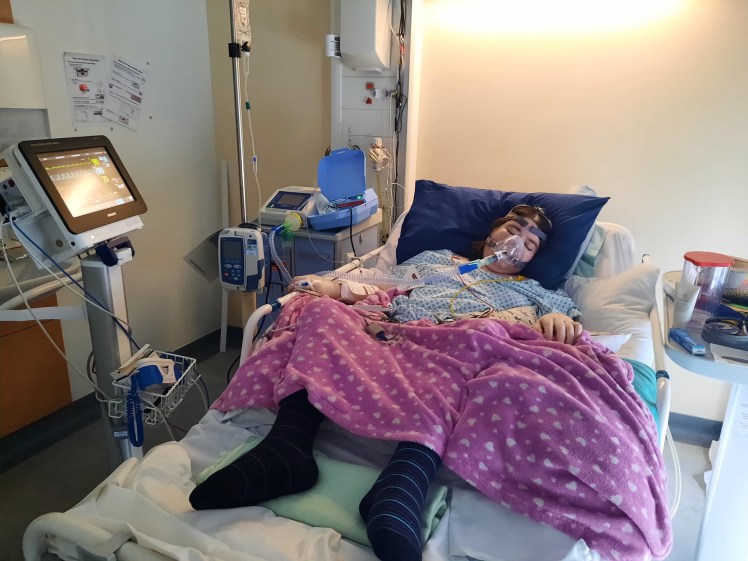
“In Limbo” is a collection of raw, heartfelt songs created in a place suspended between life and death. A strong faith had sustained Kara throughout her illness and given her comfort as she faced the end, but her new album reflects her profound struggle with wondering why her God allowed her to suffer so much. “It feels cruel,” she wrote to me once. “I don’t know what to do but keep breathing. Even that hurts.”
There is a fragility to Kara’s singing voice on the recording that hints at all she has endured since her first album. “And I am supposedly blessed!” she cries on “My Tears,” as she contemplates the reality that an extended life has brought nothing but more pain. The album has a mournful tone that contrasts with the more uplifting beauty of her previous music, and as her friend it is difficult to hear the despair voiced in the songs. But once again there is courage and strength in her vulnerability, resulting in an album that strikes the heart with its emotional power. Kara never heard the final versions of the songs, but was proud as she watched them take shape.
“In Limbo” was completed by Kara’s production team and family, with her younger sister, Emily, singing two songs of her own. The album was mixed by Pete Maher, a top engineer who has worked with acts like U2 and the Rolling Stones. In a message to Kara’s father, he described it as “a wonderful album.”
Kara Jane’s lasting gift of music and hope
When Kara died in January 2023, she became one of only a few people in the U.K. to have ME registered as the official cause of death. It’s impossible to know how many people have lost their lives to ME, as death is often attributed to other causes. Kara was passionate about advancing understanding of the illness, and her aim was to raise £100,000 to allow the ME Association (MEA) to establish a dedicated postmortem research facility.
In a statement, Charles Shepherd of the MEA said, “Post-mortem research is a vital component of any research strategy.” As an expert in ME and medical adviser to the MEA, he noted prior discoveries from a small number of postmortem ME studies, such as inflammation in spinal cord nerves.
The total that Kara dreamed of remains some way off, but the money raised so far — currently £18,000 — has enabled the MEA to establish a research partnership with the Manchester Brain Bank. This means that limited postmortem research involving people with ME can now be carried out in the UK — something that wasn’t possible at the time of Kara’s death. I hope that in time, thanks to Kara’s dream and the hard work of many others, a dedicated research facility will eventually be established.

“We are immensely grateful to Kara for being able to use the proceeds of her record sales to advancing postmortem research and setting up a formal research facility,” said Shepherd.
Kara is greatly missed by all who loved her, and her loss leaves a gap that can never be filled. But she lives on in the beautiful music she created, in the power of her message to the world, and in the hope that others in the future may not have to suffer as she did.
In Limbo was released on Friday, August 8, to mark Severe ME Awareness Day. See Kara Jane’s website for more information.
In Limbo artwork by Ruth Braham. It’s still M.E artwork by Jack Carberry-Todd. Photographs courtesy of the Spencer family.

 A Life Hidden