
Recovery stories have been popular in the media lately. Most prominent has been actress and comedian Miranda Hart (a past supporter of this blog), sharing her experience of living with ME and Lyme disease. Her account of her illness and recovery has been widely shared across print media, talk shows and in her new book.
Another story appeared in the Guardian last month and gave a personal account of author Catherine Saunders’ life with severe ME. In it she described the bleak years spent bedridden and seriously ill, and told how she then regained strength through reconnecting with her garden.
Both stories have evoked a wide range of reactions among those with ME, with some gaining hope from them and supporting the right for everyone to share their experiences as they choose; and others feeling let down by narratives that arguably perpetuate negative stereotypes about the illness.
The sensitivity of recovery stories in ME
Both women gave moving descriptions of being bedridden and unable to function, and it is to be hoped that this is the message that reached the general population. But recovery stories take on a particular sensitivity when they relate to an illness that has consistently been belittled and denied. Miranda Hart has spoken of learning to release the repressed emotions that she believes were contributing to her symptoms. Catherine Saunders wrote of her slow but steady improvement when she was given a pot plant to care for and began spending time in her garden. Both approaches were undoubtedly of value in these women’s journey towards recovery, and it’s only to be celebrated that they have now reached a place of greater wellbeing. (In both cases details are vague as to what recovery actually means for them.) But it’s not difficult to see how the emphasis of such stories could be misconstrued by a casual reader unfamiliar with the reality of ME; or why such publicity might be of concern to a patient population routinely told to pull itself together, try harder, and get outside more.
I know from personal experience that it takes courage to speak in the media about ME. There is an enormous sense of vulnerability in placing oneself in the public eye, and doing so is never a decision taken lightly. I’m aware of how difficult it must be to receive critical responses to a story shared in the spirit of celebration, or out of a wish to help others.
Recovery stories take on a particular sensitivity when they relate to an illness that has consistently been belittled and denied
But media coverage such as this can have repercussions for the wider ME community, both in terms of the influence on public perception of the illness, and also the emotional impact on individuals living with it. There’s been many a time in the past that I’ve read an account of someone’s drastic improvement and been left with difficult feelings. Perhaps the hardest of all being the painful self-doubt of questioning whether, if it’s all as straightforward as it sounds, I’m trying hard enough, experimenting with new treatments enough, and wanting to recover enough.
I’m not in a position to comment directly on Miranda’s book, having not read it myself. But the publicity – and reaction to it – has caused me to reflect on recovery stories in general, and the reasons why, unless carefully handled, they can be so distressing for the very people they seek to support.

Nuance that the media ignores
A large part of the problem lies with the media’s inability to reflect the nuances of recovery. Illness – no matter what the cause – is always framed as a battle, with those who die having “lost their fight”, and those who recover standing atop a summit of glorious health. (Ideally with a love story thrown in to cement the happily ever after.) The complex reality of chronic illness, partial recovery, and slow acceptance of lifelong incapacity is almost never addressed. Equally ignored is the fact that those who die, or those who never improve, can very often be the greatest examples of a life richly and courageously lived (a world away from losing any kind of fight), while those who recover can be left with lasting burdens that complicate the happiness of better health.
Recovery stories generally offer a highly simplified version of the complex and draining struggle that is life with serious illness. The tendency to focus on one miracle therapy as the treatment that transformed everything stands starkly at odds with most people’s experience, and certainly my own. Were I to name the treatments that I believe have been of help to me in my own slow improvement, the list would be a long one. It would range from drugs to supplements to diet to strict pacing and high quality rest, to the gentle strengthening of atrophied muscles. The list would also include therapeutic work on my emotions and nervous system, with particular emphasis on the trauma resulting from severe illness and medical abuse. And yes, reconnecting with nature has been very important for me too. But to isolate any one item on the list would be to diminish the whole, which has been an intricate tapestry of interventions, each of which was only possible when I had reached a certain level of health.
In any story of recovery or improvement, there will always be a sound helping of good fortune
And this is perhaps the most important point of all: many people with ME, particularly the severely affected, are too ill to access the very therapies that might theoretically be of some help. A large number also lack family support, financial security and suitable housing. When basic survival consumes all resources, anything more is an unattainable luxury. In any story of recovery or improvement, there will always be a sound helping of good fortune. I have friends who have died; others who have endured the most extraordinary levels of pain and suffering for endless years, without respite: all of them have done everything within their power to try and get better.
Recovery stories will very often claim that a shift in mindset, or an increase in activity levels, was critical. But the silent story for most of us is that we “decided to get better” but couldn’t; started doing a little more each day but had a relapse; tried yet another treatment and found it wanting; and then, having lost everything, built the best life we could from the ruins.

The complex reality of recovery
I believe that great care must be taken when speaking of recovery and defining what it means. Although I know of many people who have seen significant improvement, and a few who have improved enough to return to normal life, I know of none who have achieved the complete and lasting return to health that constitutes true recovery. (I’m not saying they don’t exist, but they must be rare.) One of the cruellest aspects of the illness is the strong tendency for relapse. There is not one of us who hasn’t seen cherished progress lost overnight, sometimes permanently. And sadly that includes those who at one time believed themselves fully well again.
None of which is meant to be defeatist, or to suggest that there isn’t hope. I believe that, under the right circumstances and with the right support, progress towards a better way of life is possible (though far from guaranteed) even from very severe ME. My own progress – limited but significant – stands as evidence of this. But I personally only feel inspired by stories that contain enough realism to resonate accurately with my own situation.
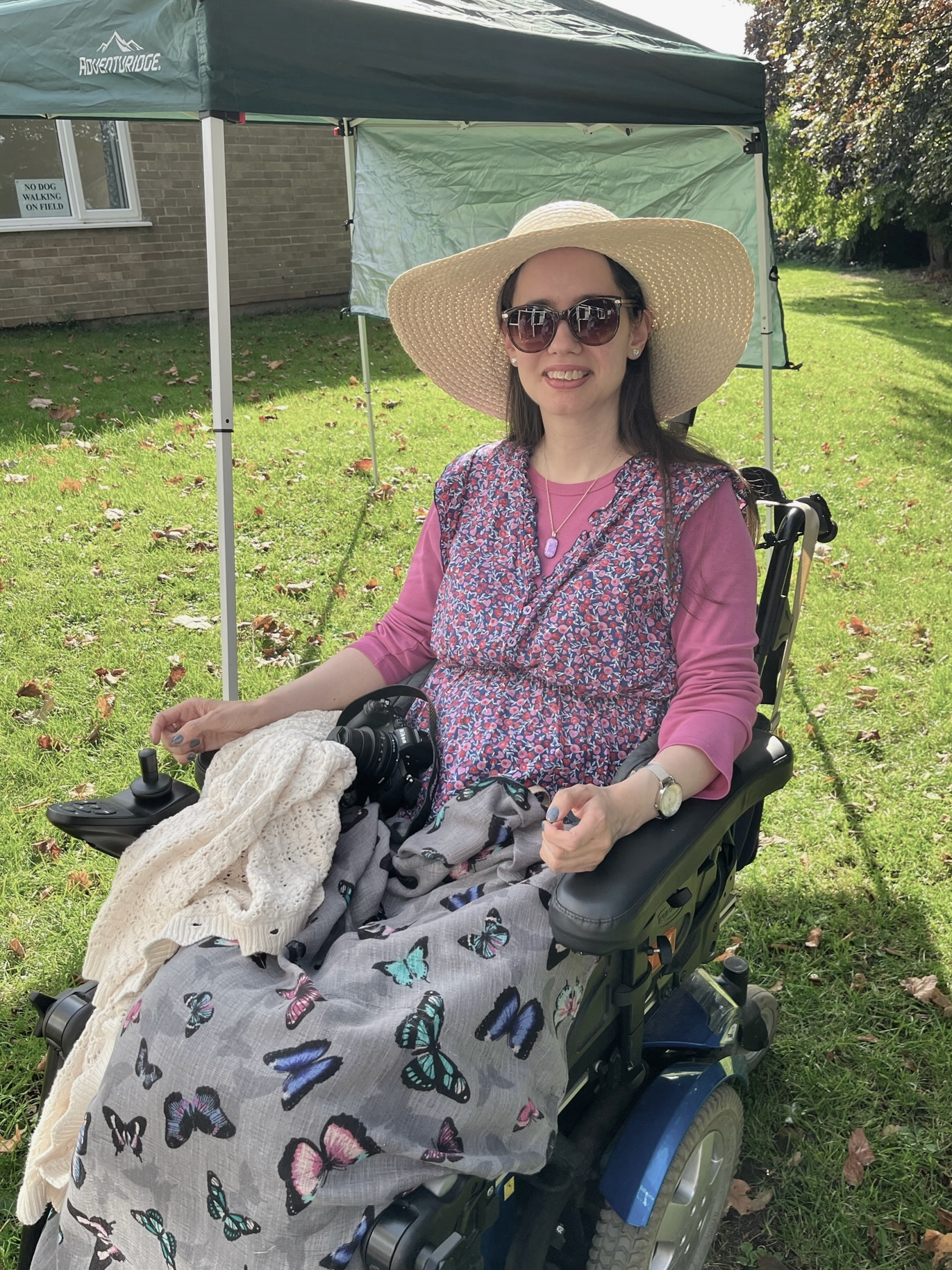
I’m in a place now that my younger self – too ill to eat, or have a conversation, or look at a magazine – would have considered recovery. In reality, I remain light years away from any normal measure of the word. This dual perspective shapes my life. On the one hand I am filled with gratitude to now be able spend time with loved ones, to enjoy outings in my wheelchair, and to begin rediscovering a world that has been denied me for so long. I live in genuine hope that my progress will be ongoing and that my world will continue to expand. On the other hand, I still live in a body where pain is rarely far from the surface, disability a constant, and the future uncertain. Visit me one day and you will see me laughing, joking and looking well; visit me another and I will be crying out in pain, or flat out in the dark too ill to move.
I believe that, under the right circumstances and with the right support, progress towards a better way of life is possible
While the path out of a shorter, milder illness might be more straightforward, the picture is very different after decades of being severely unwell. I have osteoporosis from malnutrition and lack of weight-bearing during my formative years, and spinal curvature from being forced into a chair when my muscles were too weak to support me. Then there are the psychological scars, which arguably run deeper still. I have PTSD (post-traumatic stress disorder) which leaves me terrified of any medical encounter, and sees me waking in the night believing I’m about to be killed. Countless opportunities and life experiences have been lost forever. Even if a miracle cure for ME were to be found, I would carry its impact for the rest of my life.
All of which means that stories of recovery can be difficult to process when they present a version of reality so at odds with my life, and the lives of so many others. Everyone’s experience is different, of course, and I would not deny anyone the right to share what they believe has been of help to them. But it’s imperative that it’s done so responsibly, and with an acknowledgment of potential harms. And those harms include unenlightened therapists, who can cause untold damage through pushing fragile bodies too hard.
Wider issues for the ME community
There has been disappointment in the ME world, with many feeling that recent recovery stories have shifted focus away from the serious issues raised by Maeve Boothby O’Neill’s inquest. The media even began reporting on the “controversy” within the ME community, as though a celebrity’s autobiography were the most pressing issue facing those with no medical support, virtually no research funding, and no effective treatment pathway.
Wider questions have been raised over whether, in speaking out about living with ME, someone’s primary duty is to their own experience, or whether there is a responsibility to advocate for the wider cause – particularly if the person in question has a large public platform. Equally pertinent is the question of whether any publicity is good publicity or if, in fact, “raising awareness” can be counterproductive when the picture painted is not representative of the majority experience.
These questions are more complex than they might at first appear, with no straightforward answers. Not least because recovery stories, with their neat ending and promise of a way out of suffering, will always have more popular appeal than a harsh analysis of reality. For those living that reality, the challenge is to retain faith in one’s own perspective and judgement, even when confronted with coverage which can, at times, feel diminishing.
And finally – an important message
When I look back on the long and painful road of my own improvement, I see a truth rarely addressed in recovery stories. Which is that our bleakest times form the foundation of every step forward we ever make. The courage that exists in that place of sheer survival is at the root of every achievement that follows – even if the achievement is “just” living the best life possible within huge restrictions.
To anyone in that darkness now – where hope is destroyed and all appears lost – I say this: never feel that your struggle to exist is not enough. If all you can do today is breathe and cling on, that is an act of courage and daring. And one worthy of all the column inches in the world.

Image credits and descriptions:
Main image: A man stands at the top of a mountain, arms outstretched. He is dressed in black, and the mountains around him appear white in the sunlight. Jason Hogan on Unsplash
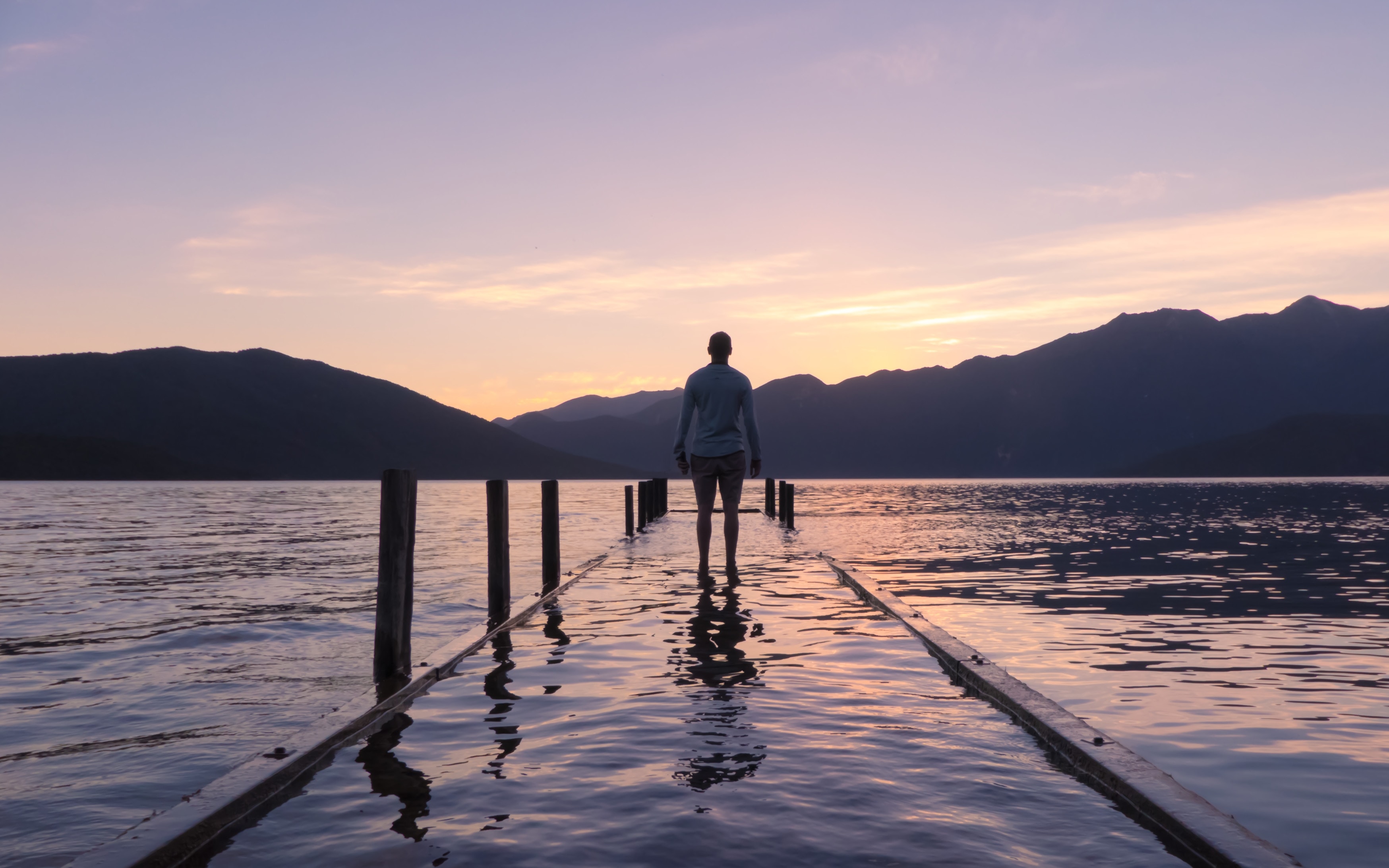
Other images: 1) Patrick Fore on Unsplash. A path leads through woodland. Sunlight is breaking through the trees. 2) Štefan Štefančík on Unsplash. A rocky mountain range under a purple-coloured sky. 3) Naomi Whittingham. Naomi, a white woman with long dark hair, sits outside in the sunshine in a wheelchair. She wears bright colours, sunglasses and a straw hat, and is smiling at the camera. 4) Tyler Lastovich on Unsplash. A person stands at the edge of a lake, looking out at the vast body of water. Their feet are submerged by water. 5) Nick Scheerbart on Unsplash. Sunrise over the sea, with dark clouds tinged by the sun.

 A Life Hidden