
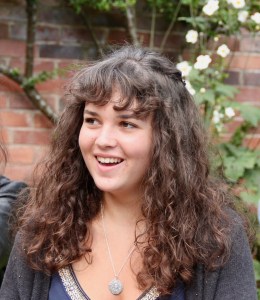
Maeve Boothby O’Neill was a young woman with great hope for the future and a wish, in her own words, “to advance the cause of human flourishing.” She was a gifted writer working on her first novel, and a treasured daughter and sister. It is her family’s wish that she should be remembered primarily for the light that she brought to the world; for her warmth, her intelligence and her determination. She was brimming with potential.
Maeve died on 3rd October 2021, aged 27, after many years of suffering from severe ME. I never had the privilege of knowing her personally but, thanks to the extraordinary efforts of her parents to bring her story to light, her name is one that will remain with me always. Over the past two weeks, an inquest into her death has been held at Exeter Coroner’s Court, with proceedings covered extensively by the mainstream UK media, including the BBC, The Guardian, The Daily Telegraph and The Times. (ME Research UK have compiled a list of media coverage here and here.) For my own wellbeing I have had to limit the number of reports that I have read, and I have not felt able to join the inquest online. I am grateful to all those from the ME community who have done so, and who have demonstrated their support to Maeve’s parents in this way.
The inquest has been told that Maeve died of starvation when she lost the ability to eat and failed to receive the nutritional support that she needed. At the end of this week, the coroner will deliver her verdict on the circumstances that led to the death of a young woman who desperately wanted to live. “I don’t understand why the hospital didn’t do anything to help me when I went in. I am hungry. I want to eat … Please help me get enough food to live,” Maeve wrote to her GP, who appears to have done all she could to help, and to have shared the family’s dismay when Maeve was repeatedly discharged from hospital. Maeve’s parents, Sarah Boothby and Sean O’Neill, strongly believe that her death was “wholly preventable,” and that the hospital failed in its duty of care. ME expert Dr William Weir, who attempted to advise the hospital on ways of safely feeding a severe ME sufferer, told the inquiry that “her illness was regarded by some of the Royal Devon and Exeter staff as her fault” and that they believed that her immobility “was self-inflicted.”
Maeve found herself in the terrifying position of being treated by professionals who were unable – and in many cases unwilling – to grasp the severity of her illness
The desperate situation in which Maeve found herself will be painfully familiar to almost everyone who has lived with severe ME. Malnutrition is a common complication of the illness, and formed a significant part of my own experience for many years. The causes are usually multi-faceted and can include severe weakness in the muscles required for chewing and swallowing, nausea and vomiting, severe pain, and in some cases paralysis of the stomach and intestinal failure. Maeve, like many before and after her, found herself in the terrifying position of being unable to consume enough nutrients to sustain life, while being treated by professionals who were unable – and in many cases unwilling – to grasp the severity of her illness.
The desperation of Maeve and her mother as they pleaded with professionals to help is almost unbearable to contemplate. By the end of her life, Maeve was unable to sit up or speak, and was doubly incontinent. As Sarah struggled to cope with caring alone for someone so seriously ill, she made repeated phone calls in search of help. None was forthcoming. Maeve’s GP said that she had “never seen anyone so poorly treated by the NHS.”
It will come as a shock to the wider population that, in 21st century western society, someone could starve to death through lack of medical intervention. To those of us who have lived this reality for decades, it is no surprise at all. A significant number of medical professionals still hold outdated ideas of ME as a psychological condition. Others see it as a moderate, fatiguing illness and cannot comprehend the presence of such severe symptoms. Then there are those who do recognise the seriousness of ME and wish to help, but find themselves paralysed by a health system that is woefully ill-equipped to deal with such complex and challenging cases. “I don’t think there is a ward anywhere in the country that is appropriate to manage ME patients,” Dr David Strain, a doctor at the hospital, told the inquest.
With a few extremely rare exceptions, I do not believe that anybody enters a career in medicine with a wish to harm those in their care. Yet when doctors and nurses are faced with patients who do not fit neatly into pre-defined boxes, that is very often the end result. A strong culture exists within medicine whereby patients whose symptoms do not conform to an expected pattern, or whose test results fail to demonstrate exactly what is wrong, or whose bodies do not respond to treatment in the normal way, find themselves held responsible for their own suffering. A doctor’s frustration or fear can very quickly transmute into blame.
The lack of compassion shown towards my illness at times, particularly when I was still a child, is something I have never been able to comprehend. In 2016 I contributed to a training seminar for junior doctors. In a piece called The Power of Listening, I wrote:
“When I see a doctor, it should be irrelevant whether they believe my illness is of physical or psychological origin, or even whether they think I am not ill at all and merely in some state of existential distress. I should receive the same level of care and compassion regardless. I should be treated with respect and my words heard. Because when a patient’s perspective is viewed as invalid, compassion becomes an early casualty. Accuracy is also compromised: when you cease to listen to the one person experiencing the illness you are attempting to treat, terrible mistakes can and will be made.”
Thirty-five years after my first traumatic encounters with the medical profession, very little has changed in terms of the treatment I can expect to receive if I am admitted to hospital. Indeed I would rank hospital admission as one of the greatest possible threats to my health, a view shared by almost everyone with my condition. It is hard to express the frightening sense of vulnerability engendered by being severely ill, and yet having genuine reason to fear the very system that is supposedly there to help.
It is hoped that Maeve’s inquest will be a turning point in the way that people with severe ME are treated. Enormous credit is due to her parents for ensuring that the process has laid bare so much of what she endured. Their courage in confronting the most harrowing memories of their lives can never be overstated, and they have the gratitude of the entire ME community.
It is hard to express the frightening sense of vulnerability engendered by being severely ill, and yet having genuine reason to fear the very system that is supposedly there to help
But sadly there is a strong sense of having been here before. When Lynn Gilderdale’s death made headline news in 2010, we all hoped that something would change. When my close friend Emily Collingridge died in 2012, in very similar circumstances to Maeve, we hoped something would change. When Sophia Mirza, Merryn Crofts and Kara Spencer all had ME recorded as the cause of their death, we hoped something would change. And yet in the past year alone, numerous cases have been in the news of young women (including Alice Barrett, Millie McAinsh and Karen Gordon) fighting for their lives because of hospitals failing to provide them with appropriate nutritional support. These high profile cases represent just a fraction of the total, with countless others taking place unseen. (It’s important to add that, even though all those listed here are female, men and boys can be – and are – just as severely affected and badly treated.)
While it is vital that fatalities receive the attention they deserve, it’s important that death is not the only outcome by which we measure medical damage. It is not only in the area of nutrition that problems arise, but much more widely, in all aspects of care. One of the most common causes of lasting damage to people with ME is being forced into activity that exceeds our limits. I know of too many people trapped in a living death because of the way in which they were treated by doctors, their bodies clinging on to life but barely existing. In my own case, my illness was made much worse as a result of the medical abuse I suffered earlier in my illness. (My story was told in more detail in the award-winning film Voices from the Shadows.) Although I am now making physical progress, the traumatic scars run deep. The prospect of any encounter with the medical profession, even the most basic kind, can induce an overwhelming sense of fear in me. I have frequent nightmares from which I wake fully believing that I am about to be killed. I am receiving ongoing professional support for PTSD (post-traumatic stress disorder), and I know that these fear responses are likely to be with me for the rest of my life.
But I do have a life. It’s a limited and very difficult life, but one for which I am grateful every single day. After over three decades of living with severe ME, my health is slowly improving and there is light and colour in my world again. Every time that I am able to laugh with my family or enjoy an outing in the sunshine, I am mindful of how close I came to losing my life, and of all those – including friends I held dear – who will never again know these simple pleasures.
Maeve’s inquest heard that her GP is now suffering from PTSD as a result of her involvement in the case. If witnessing such profound suffering, and ultimately being powerless to save Maeve’s life, has had such a destructive effect on a professional, it gives some indication as to the likely impact on Maeve’s family. As they come towards the end of the legal process relating to her death, it is perhaps only now that they have the space to begin grieving their unimaginable loss.
It is small consolation, but I hope there will be some comfort for them in knowing that Maeve has touched the world. Her strength and courage have moved so many of us, and she will never be forgotten. And maybe, thanks to all her parents have done, she will prove to be the catalyst for meaningful change. She and we deserve nothing less.

Update
On Friday 9th August 2024, the coroner found that Maeve died of natural causes, due to severe ME. ME Research UK have written a detailed summary of the findings, which can be read here.
Image credits and descriptions:
Main image: A close-up shot of forget-me-not flowers. Yoksel Zok on Unsplash
Additional image: Maeve Boothby O’Neill. She has long, wavy brown hair and is smiling happily. Photograph courtesy of her family.

 A Life Hidden